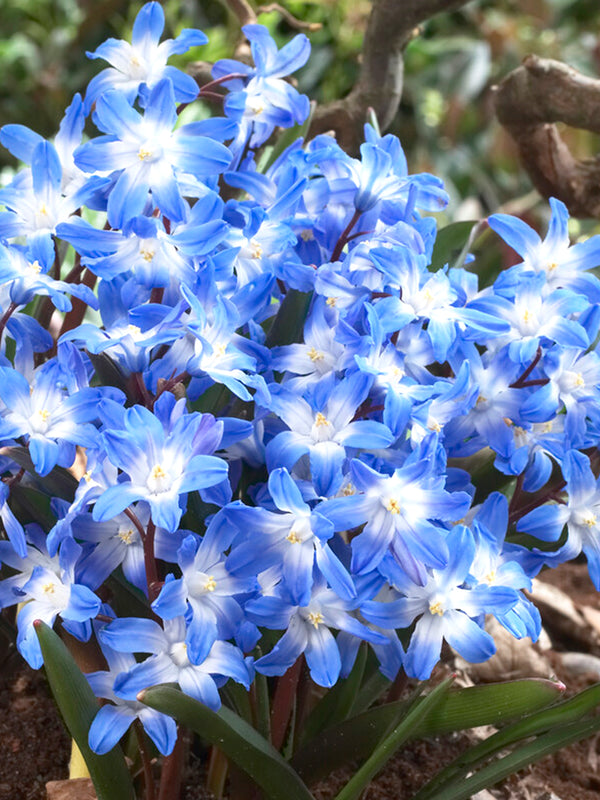
Chionodoxa Luciliae (Glory of the Snow)
Bring early spring color to your yard with vibrant Chionodoxa
When you want brilliant color before winter even wraps up, Chionodoxa bulbs deliver every time. Blooming from late winter straight into early spring, often bursting right through melting snow and late frosts, these spring flowering bulbs provide dependable, cheerful color well before most plants wake up. Showing off in vivid hues of gentian blue, soft lilac-pink, and clean white, each Glory of the Snow flower spreads its petals into an upturned, star-shaped blossom designed to capture early season sunlight. These little powerhouses naturalize with minimal effort, forming thick, colorful carpets underneath shade trees, along flower beds, inside rock gardens, or packed into porch containers.
Browse our hand-selected collection of top-size Glory of the Snow bulbs, graded for vigorous root growth and outstanding performance in your garden. When you plant Chionodoxa, you get high-grade Dutch bulbs that come back fuller, spread reliably, and multiply year after year.
Showing 1 - 5 in 5 items
CHIONODOXA BULBS SHIPPING TO THE USA
The mountain roots of Glory of the Snow
Few other spring flowering bulbs boast a name as fitting as Chionodoxa, translated literally from the Greek words for snow (chion) and glory (doxa). These miniature wonders earned the moniker honestly, frequently sending starry blooms right up through late winter snowdrifts and crusty frost.
Rugged alpine natives from the rocky Mediterranean peaks of Turkey, Cyprus, and Crete, chionodoxas belong to the Asparagaceae family. While gardeners often mistake them for Scilla (squill), telling them apart is simple: where Scilla bells droop downward, Glory of the Snow points its starry, wide-open faces straight up toward the sky.
Growing just 4 to 6 inches tall, these low-maintenance perennials adapt seamlessly to American gardens. They fit naturally into rock gardens, border edges, troughs, and patio containers, pairing effortlessly with snowdrops and early crocuses while soaking up full sun before overhead shade trees leaf out.
They also make exceptional lawn naturalizers. The slender foliage fades and retreats underground well before the main mowing season kicks off, keeping your turf care simple.
As a bonus, local wildlife like deer and rabbits ignore them entirely, leaving the blooms undisturbed as a critical source of early pollen for waking honeybees.
Top Chionodoxa varieties and colorful blends
Violet-blue might be the trademark shade of glory of the snow, but Chionodoxa Luciliae actually flowers in a surprising range of soft pastel tones. Cherished for their tidy growth habit and starry, upward-facing blooms, these early gems bring welcome brightness to bare ground.
At DutchGrown, we supply top-size bulbs across every individual color:
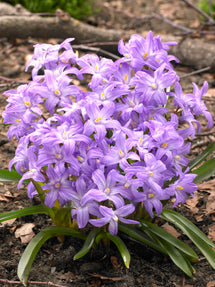
- Chionodoxa ‘Luciliae’: The timeless classic, producing bright periwinkle-blue stars accented with a clean white center.
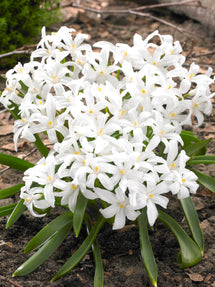
- Chionodoxa ‘Luciliae Alba’: A crisp, all-white selection that forms a luminous, snowy drift along garden beds, borders, and tree lines.
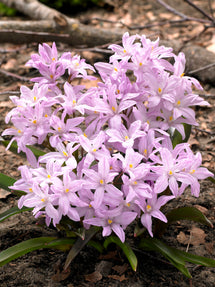
- Chionodoxa ‘Luciliae Violet Beauty’: An eye-catching cultivar featuring soft purple-violet petals surrounding a radiant, pale eye.
- Chionodoxa ‘Luciliae Rose Queen’: A charming blush-pink variety that introduces subtle warmth to cold-climate landscapes.
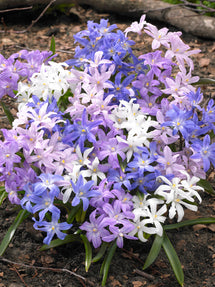
For gardeners who prefer a multicolored tapestry over a solid sweep of one shade, a Chionodoxa blend is an easy, rewarding choice. Mingling blues, purples, pinks, and whites together creates a shifting, mosaic-like display across your beds and containers from late winter through early spring.
Planting Chionodoxa bulbs for an effortless spring display
Glory of the Snow is remarkably easygoing, but dialing in a few planting basics ensures the most prolific blooms. As fall-planted bulbs, Chionodoxas should go into the ground between September and November, well before the ground freezes solid.
A reliable rule of thumb is to wait until soil temperatures cool to 60°F or lower, this prompts strong root development without tricking the bulbs into pushing up early foliage.
Pick a spot in full sun or partial shade that offers loose, well-draining soil. Saturated, puddle-prone ground will rot dormant bulbs, so lighten heavy clay by working in coarse sand, perlite, or compost to keep moisture moving freely.
Set each bulb pointed end up, roughly 3 inches deep. Space them about 3 inches apart in loose, informal sweeps across your garden beds, rock gardens, or under shade trees to create a naturalized look rather than rigid lines.
For patio containers, window boxes, or troughs, ensure your pots have drainage holes at the base. You can pack bulbs closer together in containers, about 2 inches apart, as long as they do not touch each other or the pot walls.
Soak the soil once after planting to settle everything in; typical fall and winter precipitation usually covers moisture needs after that.
After the flowers fade in early spring, resist the urge to trim: leave the foliage intact until it turns completely yellow and dies back naturally. This window allows the bulbs to store energy for next year's show.
When left alone in the soil, colonies readily spread across your yard through self-seeding and underground bulb offsets. For a deeper breakdown, check out our guide on how to grow Chionodoxa.
Shop premium Chionodoxa bulbs at DutchGrown
Looking to jumpstart your yard with early spring color? DutchGrown supplies premium, top-size Chionodoxa bulbs graded for maximum flower power and dependable season-after-season performance.
Every bulb undergoes strict quality checks before shipping, ensuring only the healthiest, most vigorous stock lands on your doorstep.
Browse our lineup of classic periwinkle-blue, snow-white, and soft pink cultivars, or pick up a pre-blended mix for an instant sweep of mixed colors. We ship dormant Dutch bulbs straight to your door across the continental US.
Frequently asked questions about Chionodoxa
Does Chionodoxa come back every year?
Yes, chionodoxa is a dependable perennial that returns and expands every year. Once settled into well-drained soil, these hardy bulbs naturalize easily through underground offsets and self-sown seed. Just let the foliage fade and wither naturally after blooming so the bulb can recharge for the next season.
Where is the best spot for growing Chionodoxa?
Aim for a location in full sun to dappled shade with moist, fast-draining soil. They perform exceptionally well along the front edges of garden beds, tucked into rock gardens, naturalized directly into lawn turf, or clustered under deciduous trees where they can soak up early spring sunlight before the tree canopy fills in.
When do Chionodoxa bulbs bloom?
They bloom in late winter to early spring, typically between February and March depending on your USDA planting zone. As one of the earliest spring flowers to appear, their starry petals routinely break right through snow cover and light freezes, delivering welcome color before neighboring perennials even begin to stir.
What should you do with Chionodoxa after flowering?
Leave the foliage alone until it turns completely yellow and dies back on its own before cleaning up the bed or mowing the lawn. Those green leaves continue photosynthesizing after the blossoms fade, channeling vital energy back underground into the bulb. Cutting the foliage back prematurely starves the bulb and diminishes next year's flower display.
Does Chionodoxa spread aggressively?
No, it multiplies steadily without becoming invasive or taking over your yard. Chionodoxa spreads gently over several seasons via self-seeding and bulb division, knitting into dense, colorful mats without crowding out surrounding perennials. This polite growth habit makes it ideal for woodland gardens, mixed borders, and grassy slopes.